
How quick service restaurants use speed, coordination, and technology to improve throughput, accuracy, and guest convenience.
How quick service restaurants use speed, coordination, and technology to improve throughput, accuracy, and guest convenience.
A quick service restaurant may look simple from the customer side: guests place an order, the kitchen moves fast, and food is handed off in just a few minutes. In reality, high-performing QSR operations rely on a tightly connected system built around speed, consistency, and constant communication across every station.
Unlike full-service restaurants, QSRs depend on throughput. Every second matters at the counter, in the kitchen, online, and in the drive-thru. Industry reporting continues to show how order flow, kitchen visibility, and integrated technology directly affect wait times, order accuracy, labor efficiency, and guest satisfaction in high-volume environments.
1. Speed Starts at Order Capture
In a QSR, the first bottleneck often happens before the kitchen ever touches an order. Counter service, self-order kiosks, mobile ordering, and drive-thru lanes all depend on fast, accurate order capture. If staff have to repeat items, correct modifiers, or manually reconcile channels, the line slows down immediately. Strong QSR operations reduce friction at the point of entry so the rest of the system can keep moving.
2. The Kitchen Has to Function Like a Production Line
Once an order is placed, the kitchen must process it with speed and consistency. Prep lines, fryer stations, assembly areas, and packaging zones each play a role in moving food from ticket to handoff. Because QSR kitchens handle high volumes and repetitive menu items, success depends on standardized workflows, clear routing, and minimal confusion between stations. The goal is not just cooking faster, but moving every order through the same reliable process under pressure.
3. Throughput Depends on Visibility
In a busy QSR, team members need to know what is coming next, what is delayed, and what needs to be prioritized. That visibility is essential whether orders are coming from the front counter, a mobile app, delivery platforms, or the drive-thru. Kitchen display systems and well-structured order queues give staff a shared view of demand so they can respond faster, reduce errors, and keep service steady during rush periods.
4. Handoff Is Where Accuracy Meets Speed
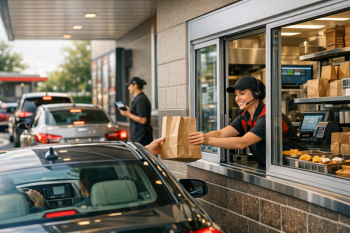
A QSR order is only complete when it reaches the right guest correctly and on time. Packaging, labeling, order confirmation, and final handoff all matter, especially when multiple channels are running at once. Drive-thru windows, pickup counters, and third-party delivery handoffs each create opportunities for mistakes if the process is not clearly managed. The faster the operation moves, the more important accuracy becomes at the final step.
5. Online Ordering and Drive-Thru Change the Entire Workflow
Modern QSRs no longer operate through a single order channel. Online ordering, delivery apps, kiosks, curbside pickup, and drive-thru service all feed demand into the same operation. That creates new pressure on staffing, kitchen timing, and customer communication. When these channels are integrated well, restaurants can increase volume without losing control. When they are disconnected, bottlenecks multiply quickly.
The Technology That Keeps a QSR Moving
Technology is central to QSR performance because it connects speed with control. Integrated POS systems, kitchen display systems, handheld devices, kiosks, online ordering platforms, and drive-thru workflows help operators reduce wait times while maintaining order accuracy. Unified restaurant systems support faster order routing, clearer kitchen communication, and better visibility across high-volume service channels.
QSR operators often need more than a payment terminal. They need connected systems for online ordering, drive-thru support, handheld ordering, website integration, remote support, and operational training. The right technology environment gives restaurant teams the tools to move faster without sacrificing consistency.
Conclusion
A quick service restaurant succeeds when every part of the operation is designed for flow. From order capture and kitchen routing to packaging, handoff, and multi-channel demand, each step has to work quickly and consistently. With the right systems in place, QSR operators can improve speed, reduce errors, support labor efficiency, and deliver a better guest experience at scale.
If your quick service restaurant is looking to improve speed of service, reduce order friction, and create a more connected operation across the counter, kitchen, online ordering, and drive-thru, our team can help. From POS systems and kitchen display solutions to handheld tools, website integration, training, and support, we work with QSR operators to build technology environments that match the way they serve guests.
Contact us to learn how practical restaurant technology solutions can support your quick service restaurant with better speed, accuracy, and day-to-day operational flow.