
How front-of-house, back-of-house, and restaurant technology work together to improve speed, accuracy, and guest experience.
The Choreography Behind a Full-Service Restaurant Operation
At first glance, a busy full-service restaurant can seem effortless. Guests are welcomed, orders are taken, plates arrive at the right time, and tables turn over with little visible friction. In reality, every smooth service depends on a highly coordinated system of people, processes, and technology working together under pressure.
At the center of that system are two worlds that operate differently but must stay in constant alignment: the Front of House (FOH) and the Back of House (BOH). FOH teams manage the guest experience, while BOH teams focus on food preparation, timing, and consistency. Hospitality training and operations guidance reinforce how essential communication and coordination are to service quality, team performance, and the overall guest experience.
- Greeting and Seating Set the Pace
The guest experience begins before a menu is even opened. Hosts do more than greet arriving parties; they control the tempo of the dining room. Seating too many tables at once can overwhelm the kitchen, delay ticket times, and create immediate stress for servers and cooks alike. Effective pacing helps spread demand more evenly, giving both FOH and BOH a better chance to keep service steady. - Order Entry Bridges the Dining Room and the Kitchen
Once a server takes an order, the point-of-sale system becomes the bridge between guest expectations and kitchen execution. This handoff must be accurate, immediate, and easy to interpret. Special requests, substitutions, and allergy notes all need to move from the table to the line without distortion. When order entry is clear, the kitchen can focus on preparation instead of clarification. - Production Depends on Synchronization
In the kitchen, execution is rarely about one cook making one dish from start to finish. Instead, stations such as grill, sauté, and pantry work simultaneously, each responsible for part of the final plate. The challenge is timing. A steak, seafood entrée, and side items may all have different cooking times, but they must be ready together. That synchronization is one of the defining disciplines of a strong BOH team. - The Pass Protects Quality and Accuracy
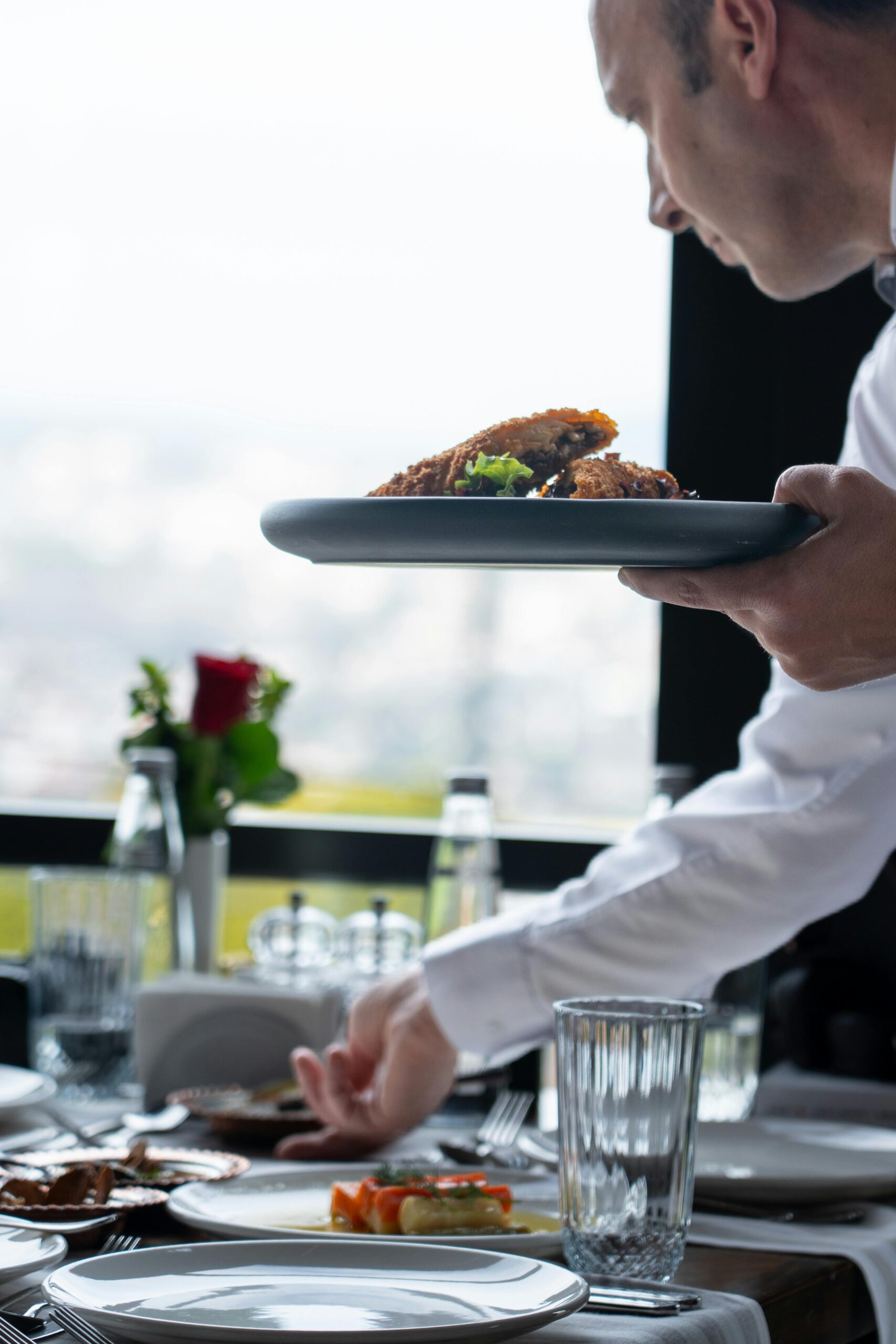
Before food reaches the table, it passes through one final checkpoint: the expeditor or expo station. This role is critical because it ensures each dish is complete, correctly plated, and matched to the right table. It is also where the kitchen’s internal timing becomes visible to FOH. A well-run pass reduces mistakes, keeps runners organized, and helps maintain consistency during the busiest parts of service. - Table Turns Keep the Business Moving
Service does not end when the plate leaves the kitchen. Payment, bussing, resetting, and reseating all influence revenue and guest flow. Efficient table turns allow restaurants to serve more guests without compromising experience. When these transitions are handled smoothly, the dining room stays balanced, and the next service cycle can begin without unnecessary delay.
The Technology That Connects It All
Technology has become one of the most important enablers of modern restaurant operations. A connected POS and kitchen display system (KDS) give both FOH and BOH a shared, real-time view of orders, modifications, priorities, and timing. Companies such as Online Orders POS Advisors, Houston POS, Florida POS, and CanacTron Services describe this kind of integrated approach as essential for improving visibility, reducing errors, and helping restaurant teams move more efficiently throughout service.
In practical terms, that means fewer missed modifiers, better coordination between stations, faster server updates, and a clearer picture of where bottlenecks are forming. This is also where service providers such as Online Orders POS Advisors and CanacTron Services emphasize online ordering, operational support, and website integration, while Houston POS and Florida POS highlight training, handheld ordering, remote support, and customized restaurant workflows. Together, those capabilities reflect how modern restaurant technology can support better decision-making in the middle of a rush.
Conclusion
A full-service restaurant may look calm from the dining room, but behind that experience is a tightly managed sequence of handoffs, timing decisions, and operational discipline. From greeting and seating to production, expediting, and table turns, each step depends on FOH and BOH working as one coordinated system. When the right technology supports the process, restaurants are better equipped to deliver speed, accuracy, and a consistently strong guest experience.
If your restaurant is looking to improve service flow, reduce order errors, and create a more connected operation from the dining room to the kitchen, our team can help. From POS systems and kitchen display solutions to online ordering, handheld tools, training, and support, we work with restaurants to build technology environments that fit their operations.
Contact us to learn how Online Orders POS Advisors, Houston POS, Florida POS, and CanacTron Services can support your restaurant with practical technology solutions designed for real-world hospitality operations.